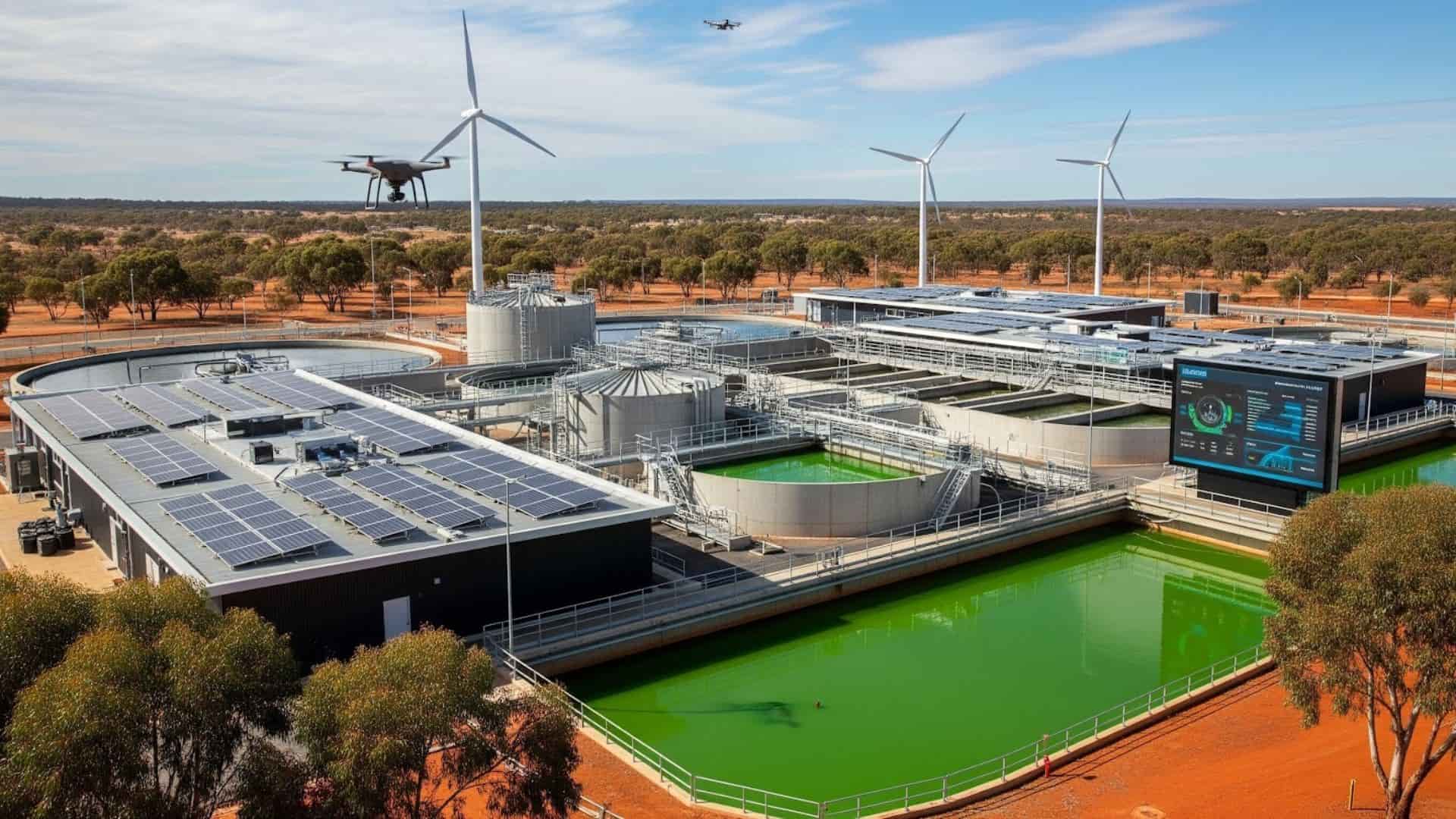
Across Australia, wastewater treatment is entering a make or break period.
Population growth, tighter environmental expectations, and ageing plant are converging at the same time emerging contaminants (including PFAS) are drawing sharper regulatory attention.
In 2026, the opportunity is clear: targeted infrastructure upgrades, smarter automation, and better resource recovery can improve compliance, reduce overflows, and lower whole of life costs.
In this guide, we’ll break down the major initiatives already underway, the technologies gaining traction, and what councils and industrial operators can do now to be ready.
Why 2026 is a pivotal year for wastewater treatment
Wastewater assets are long life infrastructure. Many plants and supporting systems were built for smaller catchments, different industrial profiles, and older discharge standards.
That mismatch shows up in the places that matter most to operators: rising maintenance load, process bottlenecks, odour complaints, and higher risk wet weather events.
2026 is shaping up as a practical turning point because multiple upgrade programs are scheduled to complete or hit major milestones, and because regulatory and community expectations are continuing to rise.
The best outcomes will come from a “do the basics well” approach (renewal, redundancy, and controls), paired with targeted technology where it delivers measurable results.
What’s driving the need for improvement
1) Ageing equipment and constrained capacity
Several Australian plants are operating with equipment that’s decades old.
A common pain point is biosolids handling, where outdated dewatering can drive high haulage costs, poor cake quality, and limited reuse options.
Aging systems also tend to have less redundancy, increasing the likelihood that a single failure becomes an environmental incident.
2) Population growth and changing loads
Growth corridors and regional centres are seeing sustained pressure on sewage treatment plants (STPs).
As catchments expand, so do peak flows, trade waste inputs, and the complexity of planning for future stages.
Without a clear upgrade path, operators can get forced into reactive spending and “stop gap” workarounds that don’t age well.
3) Tighter environmental expectations, including PFAS
PFAS (per and polyfluoroalkyl substances) are increasingly relevant to wastewater and biosolids discussions.
As guidelines tighten, utilities and industrial operators may need better upstream controls, stronger monitoring, and (in some cases) additional treatment steps.
Activated carbon filtration and other targeted treatment media are being positioned to meet rising demand.
4) Higher consequence of failure
Overflows and spills are not just environmental issues.
They can trigger EPA attention, community complaints, clean up costs, and reputational damage.
For industrial sites, an incident can also mean downtime, lost production, and difficult questions from auditors and insurers.
Major wastewater projects and upgrades to watch in 2026
Several projects underway now show the clearest “what good looks like” pattern: renew core assets, add redundancy, enable reuse, and upgrade controls.
Here are initiatives with key milestones scheduled for 2026 (or with major work leading into that period).
What these programs have in common
- They invest in the unglamorous essentials: dewatering, electrical systems, automation, and redundancy.
- They build for growth: capacity planning and modelling support staged upgrades rather than crisis expansion.
- They enable resource recovery: better biosolids quality expands reuse options (where permitted and appropriate).
- They lower compliance risk: fewer overflows, better controls, and improved reporting capability.
The technology shifts shaping wastewater treatment in 2026
Advanced dewatering to reduce biosolids cost and improve reuse options
Biosolids handling is often one of the largest operating cost centres in wastewater treatment, especially where transport distances are long. Modern dewatering equipment can:
- Improve cake solids content (reducing haulage and disposal volumes)
- Increase uptime through redundancy and more stable performance
- Create more consistent biosolids suitable for approved reuse pathways
The point isn’t technology for technology’s sake. It’s about making biosolids cheaper and safer to manage, while keeping options open for circular economy outcomes where regulations and markets allow.
Automation and electrical upgrades to improve reliability and safety
Better controls and modern switchboards don’t just reduce operator workload.
They support safer isolation, clearer alarms, improved trend data, and more predictable maintenance planning.
For regional facilities, automation can also reduce the operational burden by enabling more effective remote monitoring and targeted call outs.
PFAS focused solutions and upstream risk management
PFAS is not a single “fix it with one filter” problem. Depending on the site and catchment, the most effective approach often combines:
- Source identification: understanding where PFAS may be entering the system (industrial dischargers, legacy materials, certain firefighting foams, and more)
- Monitoring: a sampling plan that supports decision making and audit defensibility
- Targeted treatment media: such as activated carbon in appropriate applications
- Responsible off site management: for PFAS impacted wastes, where required
As guidelines tighten, the winners will be the operators who can demonstrate traceability, appropriate controls, and documented decision making that stands up to scrutiny.
Practical pathways to improve wastewater outcomes in 2026
Not every organisation is delivering an $80 million program, and that’s fine. The best improvements usually come from a disciplined sequence: understand risk, fix constraints, then optimise.
1) Start with a site specific risk and capacity review
A structured review helps you prioritise spend and reduce unpleasant surprises. Typical focus areas include:
- Wet weather bypass and overflow risks
- Single points of failure (pumps, switchboards, blowers, dewatering trains)
- Biosolids handling constraints and cost drivers
- Trade waste variability and contaminant risk
- Gaps in monitoring, logging, and reporting
2) Build redundancy where failure has high consequence
Redundancy isn’t optional in high consequence areas. It’s one of the simplest ways to reduce environmental risk. Common examples include duty/standby pumping, dual dewatering trains, backup power provisions, and robust containment where chemicals are stored or dosed.
3) Prioritise “control the controllables” before adding complexity
Before investing in advanced treatment, make sure the fundamentals are tight:
- Preventive maintenance routines are realistic and resourced
- Instrumentation is calibrated and trustworthy
- Alarm management is actionable (not noise)
- Spare parts and critical consumables are planned
4) Treat biosolids as a strategic stream, not an afterthought
When biosolids are poorly managed, they inflate costs and create compliance headaches.
When they’re handled well, they can support circular economy outcomes and reduce reliance on older disposal pathways.
The practical question for 2026 is: what investment improves biosolids quality and reduces disposal exposure over the next five to 10 years?
5) Use partnerships to accelerate outcomes
Public private partnerships (like the Dubbo facility program) can move faster than traditional pathways when they’re well scoped, governed, and aligned to long term outcomes. The key is clarity on performance targets, reporting, and who holds which risks.
Compliance and incident readiness: what good looks like
For councils, utilities, and industrial operators, “compliance” is not only meeting licence conditions. It’s also being able to prove what happened, when, and what actions were taken.
That means thinking about chain of custody, documentation, and emergency readiness together.
Documentation and traceability basics
- Waste classification and profiling: keep current profiles for wastes leaving the site, especially for complex streams.
- Transport and disposal records: ensure documentation is complete, consistent, and easy to audit.
- Sampling plans: define triggers, frequencies, and responsibilities for investigations.
- Contractor management: verify licensing, procedures, and reporting deliverables.
Emergency spill readiness (without putting people at risk)
Wastewater sites and industrial facilities can face chemical spills, overflows, and high risk releases. The safest approach is having a clear plan and calling qualified responders. Do not ask untrained staff to manage hazardous incidents.
- Confirm who has authority to activate emergency response
- Keep site maps and isolation points current
- Check that spill kits and containment assets match the site’s real risks
- Maintain a single, well known emergency contact pathway
Spill? Call Lee’s Environmental’s 24/7 emergency spill response team to contain and remediate incidents quickly, and to support compliant waste handling and reporting.
How Lee’s Environmental supports safer, more compliant wastewater outcomes
Lee’s Environmental helps councils and industrial operators manage complex waste challenges safely and efficiently, with a pragmatic focus on compliance and risk reduction.
While wastewater treatment plants are specialist assets, many of the highest risk issues around them involve the safe handling, transport, and disposal of associated waste streams.
Where Lee’s Environmental typically fits into wastewater and industrial water programs
- Hazardous waste collection and disposal: supporting compliant handling of regulated waste streams generated by treatment and maintenance activities.
- Industrial services and cleaning: including specialised cleaning where capture and proper disposal are essential.
- Emergency spill response (24/7): rapid containment and remediation to minimise environmental impact and downtime.
- Practical advice and documentation support: helping teams strengthen traceability and audit readiness.
If you’re planning an upgrade program for 2026, the best time to engage waste and response partners is during scoping, not after an incident or shutdown window is locked in.
Book a free waste audit with Lee’s Environmental or request a quote to align your waste streams, documentation, and contractor plan to your operational risk profile.
A quick 2026 readiness checklist for councils and industrial operators
Use this checklist to pressure test whether your site is ready for the year ahead.
Asset and capacity
- We have identified single points of failure and prioritised redundancy.
- We have a realistic capacity plan aligned to growth projections and wet weather conditions.
- We have validated critical instrumentation and controls.
Biosolids and waste streams
- We understand our biggest biosolids cost drivers (solids %, haulage distance, disposal pathway).
- We have current waste profiles and a clear chain of custody process.
- We have contingency options for shutdowns or equipment failures.
Contaminants and PFAS awareness
- We know our likely contaminant risks and have a monitoring plan that supports decisions.
- We have an escalation pathway if results indicate elevated risk.
Spill and overflow readiness
- We have an up to date incident response plan and trained internal roles.
- We have a clearly defined process for engaging external emergency response.
- We can access 24/7 support when incidents occur.
Conclusion: make 2026 the year wastewater gets simpler to run
The strongest wastewater outcomes in 2026 will come from practical steps: renew ageing assets, build redundancy, improve controls, and take biosolids and emerging contaminants seriously.
The projects already underway across Australia show that these improvements are achievable, and that they pay off through better reliability, stronger compliance, and fewer high consequence incidents.
If your 2026 plan includes shutdowns, upgrades, or higher risk waste streams, Lee’s Environmental can help you reduce risk and improve traceability with compliant waste services and 24/7 emergency response.