Sydney’s weather can turn quickly, causing stormwater drains and stormwater runoffs to get blocked or damaged.
Additionally, stormwater pipes, like most city infrastructure, requires regular maintenance. This is where stormwater services like Lee’s Environmental come in.
If you’re responsible for assets, developments, or facilities, the right stormwater services in Sydney help you comply with local rules, prevent flooding, and protect the environment.
Use this practical guide to choose a provider who delivers safe, traceable, and cost‑effective results.
Why Sydney stormwater needs a specialist
Getting stormwater management wrong risks flooding and environmental harm.
Sydney’s mix of steep catchments, infill development, and coastal rainfall patterns demands expert planning and maintenance. Local council rules differ, as well as on site stormwater detention and local waterways.
See City of Sydney’s DCPs for an example: cityofsydney.nsw.gov.au.
Pollution control is regulated. Stormwater sediment and pollutants must be managed and disposed of responsibly under NSW Environmental Protection Authority (EPA) rules: epa.nsw.gov.au.
Urban constraints raise complexity. Tight access, traffic control, and buried services require the right equipment and permits. Extreme weather is now normal. Rapid response and proactive maintenance reduce downtime and costly damage.
What to look for in a stormwater service provider
A poorly managed stormwater system means failed sediment traps, portable water issues, and a general degradation of water resources.
The best way to avoid these pitfalls is by hiring an expert team of stormwater service providers. We outline what you should look for below:
1) Local council compliance expertise
Choose a team fluent in Sydney’s council processes, approvals, and DCP interpretations.
They should prepare or work seamlessly with engineers to deliver compliant On‑Site Detention (OSD) designs, maintenance regimes, and certificates as needed to filter stormwater from harmful pollutants.
2) Comprehensive capability (design to maintenance)
Minimise hand‑offs. Look for providers who can coordinate or deliver:
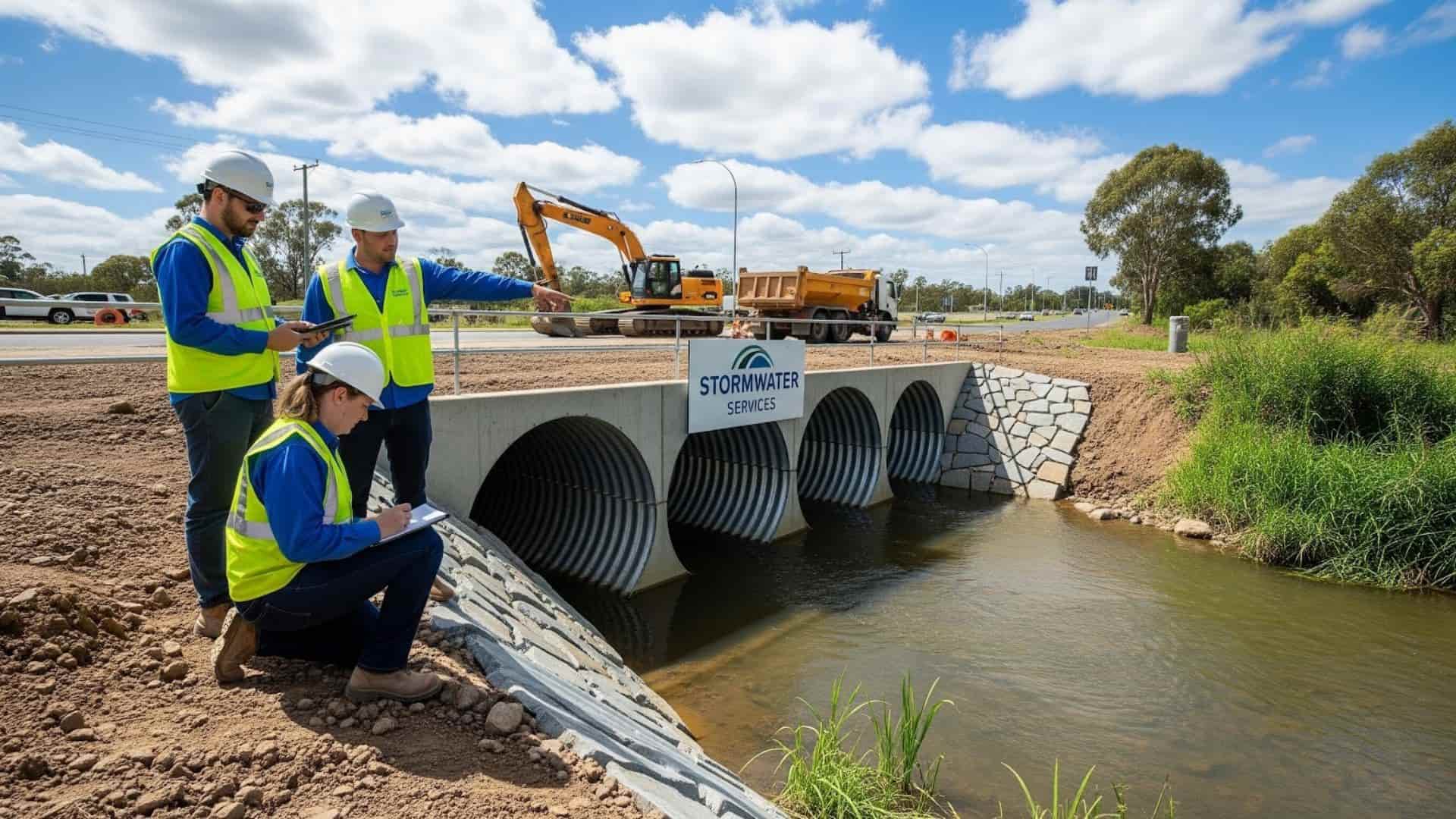
- OSD tanks, pits, pipes, GPTs (gross pollutant traps), culverts, swales, and rain gardens
- Preventive maintenance: pit and pipe desilting, GPT cleaning, OSD tank cleaning, high‑pressure jetting and vacuum recovery
- Drainage investigations and reporting: surface flow checks, as‑built verification
- Emergency call‑outs for blockages, flooding, and spill containment
- Waste collection and lawful disposal with traceable dockets
3) Sustainable, Water Sensitive Urban Design (WSUD)
WSUD aligns compliance with environmental outcomes.
Seek teams who plan for permanent pollutant capture and reuse, including:
- Rainwater harvesting and storage integration
- Bio‑retention, swales, and natural filtration Maintenance programs that keep
- WSUD assets functional and audit‑ready
4) Proven track record, technology, and reporting for stormwater management
Evidence beats promises, so favour providers who demonstrate:
- Detailed, photo‑rich reports with asset condition summaries
- Clear chain of custody for waste and sludge, including dockets and EPA‑compliant disposal
- Data you can audit: service logs, schedules, and proof of completion
- Rapid response processes for severe weather events
5) Stormwater system certifications and safety systems
Stormwater work involves confined spaces, traffic interfaces, and hazardous residues. Verify that the provider maintains:
- Documented Safe Work Method Statements (SWMS)
- Confined space and high‑pressure water jetting competencies
- Appropriate insurance and (where required) licensed transport for controlled wastes
- Quality, safety, and environmental management systems appropriate to scope
6) Transparent communication and service levels
You need reliable partners, not surprises. Prioritise providers who offer:
- Clear scopes, inclusions/exclusions, and response time commitments
- Single point of contact and project updates
- Simple, comparable quotes and no‑surprise variations
7) Reviews, references, and local reputation
Ask for recent Sydney references, case studies, and example reports.
Look for repeat work with councils, facilities managers, and industrial operators.
We also recommend that you read this blog Why Effective Waste Management is Crucial for Business Success so that you can better understand how waste management companies and organisations function together.
Key questions to ask before you hire
- Which Sydney councils have you worked with in the last 12 months, and on what scope?
- How do you confirm compliance with the relevant DCP and any OSD design requirements?
- What’s included in your maintenance program (frequency, assets, reporting, emergency call‑outs)?
- How do you manage and document waste disposal and EPA compliance?
- What safety controls apply to confined space entries and traffic management?
- What are your response times during heavy rain or flooding?
- Can I see a sample report and disposal docket?
Stormwater drainage cost drivers to budget for in Sydney
Prices vary with risk, access, and disposal needs.
Expect costs to reflect:
- Asset type and condition: OSD tanks, GPTs, long pipe runs, or heavy silt loads
- Access constraints: tight urban sites, after‑hours work, traffic control, permits
- Waste volumes and classification: sediment, oily water, contaminated sludge disposal
- Equipment required: high‑pressure jetting, vacuum recovery, lifting gear
- Documentation and compliance: reporting depth, certificates, and audit artefacts
Red flags (proceed with caution)
- Vague scopes or “too‑good‑to‑be‑true” quotes without disposal costs
- No evidence of waste tracking or EPA‑compliant disposal
- Lack of safety documentation for confined spaces or high‑pressure work
- Minimal local council experience or inability to reference recent Sydney projects
- Pushback on providing sample reports or references
Documentation you should receive
- Scope of works and maintenance schedule (what, when, how)
- Photo‑documented service reports and asset condition notes
- Waste transport and disposal dockets (chain of custody)
- As‑built or verification records where applicable
- Certificates or statements of compliance as required by council or consent conditions
How Lee’s Environmental supports Sydney organisations
Lee’s Environmental is an Australian provider focused on safety, compliance, and rapid response.We provide total waste solutions across Australia’s eastern seaboard, with a pragmatic focus on safety, compliance, and rapid response.
This includes EPA-licensed hazardous and liquid waste collection and disposal. Industrial and civil services like non-destructive digging, high-pressure clean and capture, and tank cleaning.
We also offer 24/7 emergency spill response with full chain-of-custody reporting.