Jet rodding is one of the many drain cleaning solutions that a waste management company like Lee’s Environmental might use to unblock pipes or stormwater drains.
It uses a jet rodder to clear pipes and drains from both major blockages and minor ones.
Additionally, regular unclogging with a jet rodding service ensures that the pipes are maintained and function as they were designed to.
This blog explores what jet rodding is and why it is great to unblock drains, stormwater pipes, sewer pipes, and other wastewater infrastructure.
What Is Jet Rodding?
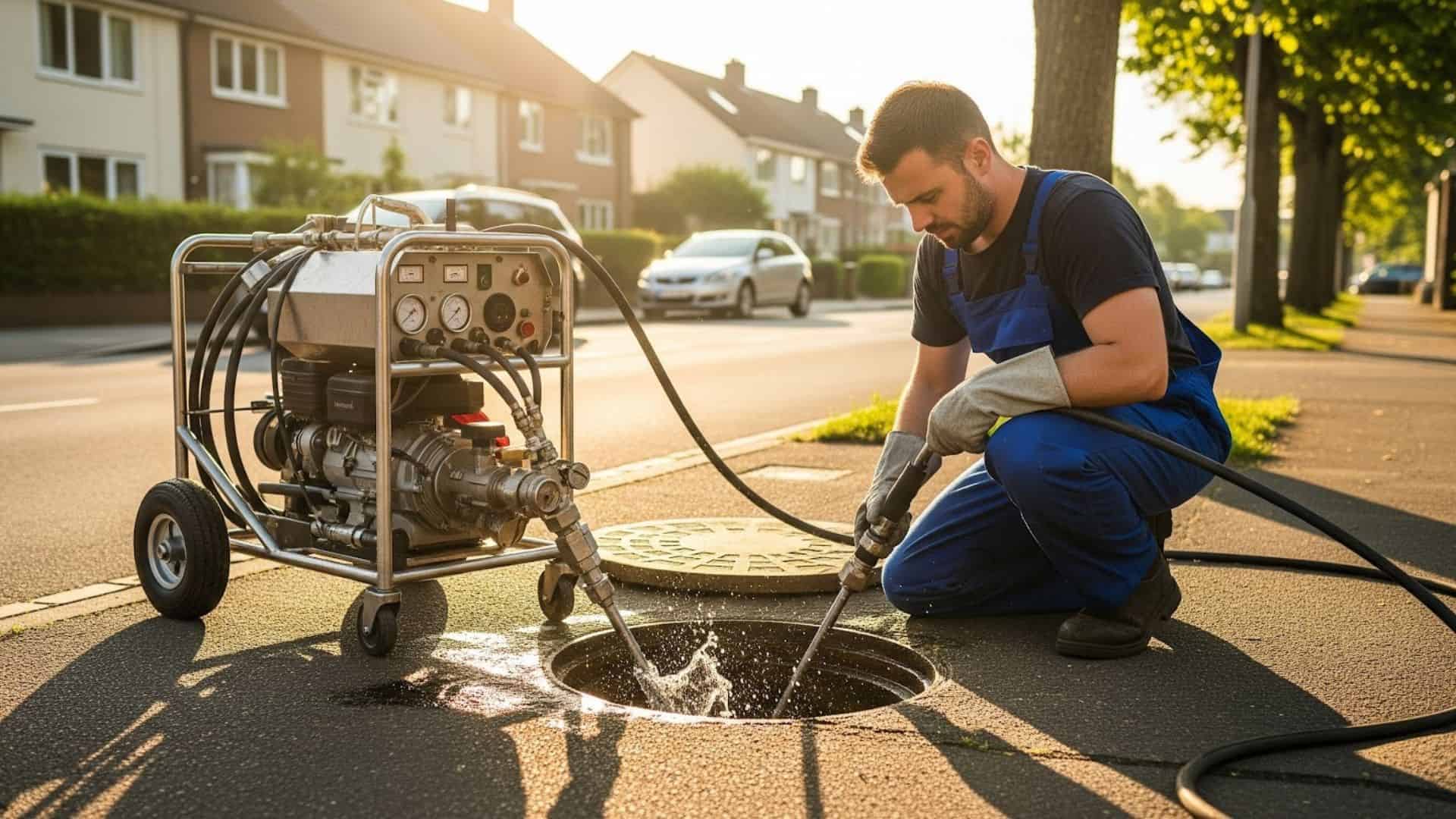
Jet rodding (also called hydro jetting) is a modern, non-invasive way to clear and clean drains and sewer lines using high-pressure water.
It uses a specialised hose and nozzle to direct water at 3,000–8,000 PSI to break up and flush away grease, sludge, silt and invasive tree roots.
The benefit of this is that clogs and blockages are effectively flushed out of the system. Given the tightness of drains, jet rodding remains one of the few options we have.
How jet rodding works
A jetting hose with a directional nozzle is inserted into the line. Water is pumped at high pressure to cut through blockages and scour the pipe.
Rear-facing jets propel the hose forward while pulling debris back towards the pit.
Captured waste is vacuumed out and disposed of under EPA-compliant procedures.
What jet rodding and high pressure water is best for?
- Grease, fat and soap scum in trade waste and kitchen lines
- Sludge, silt and scale in sewer and stormwater
- Breakdown and flushing of soft tree roots
- Preventive cleaning to reduce future blockages
When jet rodding may not suit
- Severely damaged or collapsed pipes that require repair or relining
- Extremely fragile heritage lines where low-pressure methods are specified
- Unknown line condition — best practice is to inspect first with CCTV
What Is Blocked Drain Cleaning?
Drain cleaning is the broader category of methods used to remove blockages and maintain healthy water flow in pipes and assets.
It includes mechanical and water-based techniques chosen to match the blockage type and pipe condition.
Common drainage systems cleaning methods
Jet rodding is just one of the common drain cleaning methods that companies like Lee’s Environmental use.
While the removal choice is best left to the experts, they’re still good to know. We’ve compiled a short list of some of the common methods below.
Traditional rodding (snaking):
A flexible cable and cutting head break through a localised clog for quick relief.
Jet rodding (hydro jetting):
High-pressure water cleans the whole pipe, removing residue that causes repeat blockages.
Mechanical root cutting:
Rotary tools to sever thicker root masses, often followed by jetting.
CCTV inspection:
Camera surveys to diagnose faults, verify cleaning effectiveness and plan repairs.
Vacuum recovery:
Removing dislodged waste so it doesn’t migrate downstream, and disposing of it compliantly.
Jet Rodding vs Traditional Rodding: Key Differences
- Method: Jet rodding uses high-pressure water; snaking uses a mechanical cable and cutter.
- Effectiveness: Jet rodding scours the full pipe wall; snaking opens a hole but can leave residue.
- Prevention: Jet rodding reduces recurrence by removing build-up; snaking is typically short-term relief.
- Environmental impact: Jet rodding avoids chemicals and enables waste capture and compliant disposal.
- Best use: Jet rodding for grease, sludge, silt and roots; snaking for simple, localised clogs.
Signs You Need Professional Drain Cleaning
- Slow drainage, gurgling and frequent backups
- Persistent odours around pits, kitchens or amenities
- Overflow risk during rain (stormwater) or production (trade waste)
- Recurring issues despite plunging or basic clearing
- Compliance requirements for trade waste or environmental management
Where Jet Rodding Delivers the Most Value
- Food & beverage facilities: Grease and fat removal in trade waste lines and grease interceptors.
- Manufacturing plants: Process line maintenance to minimise downtime and odours.
- Local councils: Stormwater pits, culverts and sewer laterals to prevent flooding and overflows.
- Transport depots and service stations: Forecourt drains and oily water systems.
- Commercial buildings: Amenities stacks, basements and car park drainage.
Lee’s Environmental’s Safe, Compliant Jet Rodding Process
Lee’s Environmental provides high-pressure clean-and-capture services with a focus on safety, compliance and minimal disruption to operations.
Our step-by-step approach
- Diagnose: Site assessment and, where needed, CCTV to confirm blockage type and pipe condition.
- Set up safely: Traffic and pedestrian management, confined space protocols and SWMS in place.
- Clean: Targeted jetting (3,000–8,000 PSI) with the correct nozzle for grease, silt or roots.
- Capture: Combination jet/vac units recover debris to prevent downstream recontamination.
- Dispose compliantly: Waste is transported and processed under EPA requirements and chain-of-custody control.
- Verify: Post-clean CCTV (as required) and a clear report for your records and audits.
Equipment matched to the job
- Combination jet/vac units for simultaneous cleaning and recovery
- Nozzles for cutting grease, descaling and root penetration
- CCTV crawler and push cameras for condition assessment
- Lee’s Environmental’s compliance-first approach aligns with Environmental Protection Agency (EPA) expectations for pollution prevention and controlled waste handling.
Learn more at the NSW EPA.
Preventive Maintenance: How Often Should You Clean Your Plumbing Systems?
Intervals depend on usage, waste load and risk.
As a guide:
- High-grease trade waste lines: 3–6 months
- Commercial amenities stacks: 6–12 months
- Stormwater pits and lines (council/industrial): Pre-wet season and post-major storm events
- Food & beverage production drains: Monthly to quarterly, aligned to production peaks
Lee’s Environmental can build a schedule around your audits, production cycles and council requirements to reduce reactive call-outs and overflow risk.
Cost Drivers (and How to Keep Costs Predictable)
- Access and length: Longer runs and difficult access increase time on site.
- Blockage type: Grease and roots typically require more passes and specialised nozzles.
- Disposal requirements: Waste characterisation and EPA disposal fees vary by contaminant.
- Verification: CCTV inspection and reporting add value for compliance and future planning.
Tip: Combine jetting with CCTV to verify results and plan repairs early — it often reduces total lifecycle cost.
Quick Case Snapshot
A food manufacturer experienced repeat trade waste backups that halted cleaning shifts. Lee’s Environmental conducted a CCTV survey, identified heavy grease scale, and completed targeted jet rodding with vacuum recovery.
Post-clean footage confirmed full bore capacity.
The site adopted a quarterly jetting schedule and eliminated unplanned downtime over the following year.
FAQs
Is jet rodding safe for older pipes?
Yes — when pressure and nozzle selection are matched to material and condition. We inspect first where pipe integrity is uncertain.
How long does a typical job take?
Simple lines can be cleared in one to two hours. Complex networks or heavy build-up may require half- to full-day shifts, including setup and verification.
Will you use chemicals?
No. Jet rodding uses water only. Where degreasers are specified by a client, they are applied sparingly and handled under strict environmental controls.
Do we need to shut down operations?
Often no. We plan works around production windows and can isolate areas to minimise disruption. For confined space or critical lines, short shutdowns may be needed for safety.
What should we have ready when booking?
Site plan and known pipe sizes/runs, access details and any permits or inductions, and recent issues (locations, times, odours, overflow points)
Next Steps
Need reliable, compliant drain maintenance? Lee’s Environmental delivers high-pressure clean-and-capture, CCTV verification and EPA-compliant waste handling for industrial sites, councils and commercial facilities. Request a quote with Lee’s Environmental.